

A reader/podcast listener recently wrote to our Giant Mailbag with a variation on the question of whether to keep or cancel: if all else is roughly equal, how would you decide between keeping the business version of an airline card card versus the personal version of an airline credit card? Here was the question in full:
My fiancé and I started this hobby only about 18 months ago and have collectively opened 13 personal and 15 business cards. (First redemption was 3 Air France Business Class seats to Morocco less than 6 months later and we were hooked.) Annual fees are rolling around and although I have been hesitant to close anything, I’m starting to think one or two wouldn’t be a bad idea.
One strategy I considered would be eliminating one card from a personal/business duo; for example closing either the Barclays Hawaiian Airlines World Elite Business Mastercard or the Barclays Hawaiian Airlines Mastercard. Same annual fee, same points earnings, opened them within a few months of each other. Are there benefits to keeping a personal versus business card? Would closing one be more detrimental to the game than another?
Similarly, I have the Citi AA Business World Elite Mastercard and the Barclay’s AAdvantage Aviator Red Mastercard. I know you did an episode on closing the Barclay’s versus keeping it, but what if you have a business version? Does that change the calculus?
Thanks in advance for all you do, it means a lot.
I thought this question was both interesting and a pretty common situation for those beefing up their mileage balance in a preferred program.

General business-vs-consumer considerations
Some business credit cards differ in significant ways from their consumer counterparts. For instance, the Business American Express Platinum Card® and the consumer American Express Platinum Card® share some benefits, but have very different coupon credits. Which card to keep depends on which benefits matter most.
However, many airlines (and to some extent hotels) have a consumer card and a business card that more or less mirror each other, with mostly inconsequential differences. Many folks who will consider keeping an airline credit card primarily want it for benefits like a free checked bag and priority boarding. Those types of benefits are mostly similar on cards like:
- Hawaiian Airlines Business Mastercard vs Hawaiian Airlines Bank of Hawaii Mastercard
- Atmos Rewards Visa Business vs Atmos Rewards Ascent Visa Signature
- Citi AAdvantage Platinum Select vs Citi AAdvantage Business
- JetBlue Plus vs JetBlue Business
- Southwest Rapid Rewards® Premier Credit Card vs Southwest® Rapid Rewards® Premier Business Credit Card
In those cases, there are a few key considerations.
A business card’s utilization usually won’t be reported to your personal credit report
The main advantage of a business credit card is that, in most cases, business cards do not report to personal credit bureaus (provided your account is in good standing).
That can be advantageous from a credit utilization standpoint. One of the biggest factors in your credit score is credit utilization. This impacts your score from two angles: the percentage of an individual credit line that is being used, and the percentage of your total available credit that is being used.
In other words, if you have 10 credit cards that each have a $10,000 credit limit, that’s $100,000 of total available credit. Most card issuers report the balance of your consumer cards at the time your statement cuts. If your statement cuts with a $9,000 balance on one card, your overall utilization will be 9% (that’s $9,000 used out of $100K in available credit), which is pretty good. However, your utilization for that one card is 90%, which may have some negative impact on your score. Those who want to maximize their credit score will pay off most cards to $0 before the statement cuts.
One advantage of a business credit card is that it is generally not reported to the consumer credit bureaus, so utilization on a business credit card will not impact your credit score in most cases (note that a few issuers do report business cards to consumer bureaus, but this is relatively rare unless your account becomes delinquent). While you should still pay off your cards before your balances accrue interest, business cards eliminate the need to micro-manage your balances at statement cut.
A consumer card can help your credit score
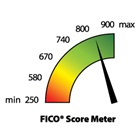
While business credit cards won’t negatively impact your credit score from a utilization perspective, neither will most business credit cards do any favors in improving your credit score.
The major factors in your credit score include things like:
- Positive payment history
- Utilization percentage
- Average age of account
- Credit mix (varied types of debt, like both credit cards and loans)
In most cases, business credit cards will not add any positive impact in any of those areas since they typically are not reported to the consumer bureaus. If you’re keeping a card long-term, it would be nice if that card could positively impact your average age of account, but most business credit cards will not.
Most airline credit cards only offer 1 mile/point per dollar spent on most purchases. It therefore does not typically make sense to put many purchases on an airline credit card since there are cards on the market that earn 2 or more transferable miles per dollar spent (including miles that are transferable to most of the major US airlines). If you aren’t actually planning to use your airline credit card very much, utilization of the individual line may not be a consideration at all. And, in that case, the unused credit on a consumer credit line would actually help reduce overall utilization.
In short, assuming your accounts will remain open and in good standing for years and utilization will be limited, the consumer card might be more beneficial from a credit score standpoint.
Keep in mind the impact is different if you’re considering which to open
The above points consider which card to keep, assuming that you have already opened a business card and a consumer card that closely mirror each other. However, if you are considering which card to open, the analysis would be different.
At a base level, while most banks will pull your consumer credit report for both consumer and business credit card applications, only consumer cards will report to the credit bureaus (in most cases). Therefore, most airline business credit cards won’t have much impact on your ability to be approved for other credit cards since they won’t show up as new accounts on your report. For instance, an airline business credit card will not add to your 5/24 count, so it will not impact your ability to be approved for a new Chase credit card. Other banks have similar unwritten rules about account velocity. We maintain a complete guide to application rules by bank with details you need to know. In general, many rewards enthusiasts prefer business credit cards specifically because they won’t have the same impact as a new consumer account on the ability to be approved for other credit cards.
Numerous other factors may influence your choice or ability to choose between business and consumer credit cards, but I thought it bore a mention that the decision about which type of card to open may differ from the decision over which card to keep.
Other small differences in benefits
Other small considerations may be side benefits based on the type of card you choose to keep.
For instance, Visa Signature (consumer) cards in the US can get a free 1GB eSIM from GigSky. Visa business credit cards can take advantage of Visa SavingsEdge opportunities. And in some cases, the airline-related benefits can vary in small ways. For instance, the JetBlue business card offers better boarding priority than the JetBlue Plus consumer card.
Many differences are small in magnitude, but might help move the needle in one direction or the other.
The advice I would give the reader
Since this reader mentioned having started this hobby 18 months ago, I would make a few assumptions that would influence my opinion. I assume:
- This individual may benefit from having a couple of older cards around for a while to keep up average age of account
- Someone who is newer to the hobby still has many new card opportunities to consider, so most spending is likely going toward a new card bonus and/or category bonus, not on an airline credit card
- Keeping a Hawaiian credit card makes sense for them (more on this in a second)
Through that lens, I would recommend keeping the consumer version of the card. I think it is more likely to be useful in terms of keeping overall utilization low and positive account history for as long as you keep the card.
In my own case, I’d be more likely to keep the business version. That’s because I have a number of accounts that are 10+ years old, so I am not concerned about a year-old credit card helping my average age of account. Further, given some resale activity, I tend to have enough spend every year to pepper spend around numerous credit cards, even to cards like a Hawaiian card. There are times when I’d rather be able to put spend on business cards so that it won’t affect my overall utilization.
However, both of those answers rely on an assumption that I don’t want to take for granted: Does keeping any Hawaiian card make sense? That is the primary question for the reader to answer.
It certainly made sense to get the Hawaiian cards, particularly since we never expected the Hawaiian cards to stick around in the long run, so they represented a chance to grab Atmos points that wouldn’t last forever. It made sense to take advantage of the opportunity for a new card bonus on them. And some dedicated rewards credit card enthusiasts might keep a Hawaiian card around just to see what happens to it in the long run, since Alaska was pretty clear that they intended to stick with Bank of America long-term. Some Barclays Aviator cardholders recently got word that they won’t be transitioned to Citi, so their Aviator cards are changing to different Barclays cards. Those with an Aviator Business card that isn’t transitioning to Barclays are apparently going to get a Juniper Business card that most of us didn’t know existed. As someone who has been in this hobby for years, I might keep a Hawaiian business card in the hopes that something like that happens in the future. But that’s a fringe thing that is likely several steps down the road, wouldn’t be of interest for many people, and which I would only consider if I didn’t mind making a little gamble with the annual fee for a couple of years just to see what happens. I wouldn’t generally recommend holding out to see what happens here; I’m just recognizing that fringe considerations like that exist.
But, in the long run, it really comes down to whether the benefits of the specific card matter to you.
In the case of the Hawaiian business vs consumer card, the consumer card offers one benefit that you don’t get on the business version of the card: an annual $100 discount for a companion on an economy class round-trip flight. It used to be that this was only valid on Hawaiian-operated flights between North America and Hawaii, but that changed last year and it is now also valid on a round-trip coach fare within North America on Alaska Airlines. If you live in a market served by Alaska, that benefit could easily pay for the card each year. The business card does not have that benefit.
My recommendation would probably be to keep the consumer card unless you’re looking to use the card heavily and prefer the utilization not to be reported.
 Want to learn more about miles and points? Subscribe to email updates or check out our podcast on your favorite podcast platform.



Great point about the possibility of a card transitioning to another card. I also have found that Barclays waives annual fees frequently. Both renewal years for my card, they waived the fee after I called and asked.
To me, whether an airline card is a keeper or not depends on a few key factors: Can you churn it? (Amex lifetime limitation makes DL card a challenge; Chase 5/24 requires careful planning). Do you breakeven? (If you use DL Reserve/Platinum companion certificate to offset the annual fee, then maybe; most others, you really need to be flying enough to visit lounges, check bags, etc. to offset). Does it assist with status (DL Reserve/Platinum $2,500 MQD Headstart; AA Citi Exec 20K bonus LPs may make it worthwhile.)
I’ve gotten the Delta Platinum Business or Reserve Business card 3 years in a row now – once or twice a year there will be NLL offers that get around lifetime language
Another thing to keep in mind is if you have the business card for a legitimate business, you can also write off the annual fee, effectively keeping the card at a discounted rate compared to the personal card.
And, if you’re business isn’t ‘legitimate’… I think you may have bigger problems than merely ‘expensing’ a credit card fee…