

As you get further into the points and miles game, there’s a good chance that at some point you’ll end up applying for credit cards that you’re interested in more for their welcome offers than for their benefits.
Those welcome offers can make the cards worthwhile for the first year, but what about beyond that? As the start of the second year approaches, you’ll want to start evaluating whether it’s worth keeping the card open, closing it, or product changing/downgrading it.
There are potentially quite a lot of factors to consider when deciding what to do, so here’s a checklist of things to consider.
Calculate values of card benefits
The first thing to do will be to calculate how much you value the card benefits that you’ll have access to from the second year of card membership and beyond. If the value of those benefits exceeds the annual fee or makes it break even, it’ll often make it worth keeping that card.
For example, many hotel credit cards offer a free night certificate of some variety at renewal each year, with many of those cards having a ~$95 annual fee. If you think that you’ll pretty much definitely use that certificate for a stay in the coming year, that can make it an easy choice to keep the card because it’s not hard to find a hotel where you’ll otherwise have had to pay at least $95 for a night.
Other cards—particularly ultra premium cards—have a whole host of “coupon book” benefits. Those benefits should rarely be valued at face value, but it is possible that the sum total of the benefits that you’ll use will exceed the annual fee’s cost. For more about how to value those benefits, check out the following posts:

Ask for a retention offer
Banks generally like to keep their customers, so sometimes they’ll offer an incentive for you to keep a credit card open. This is commonly known as a retention offer.
Retention offers can take a number of different forms depending on the bank and depending on the cardholder. Some banks will waive a card’s annual fee for a year, meaning you can keep the card open at no cost.
Others will try to tempt you into keeping the card open by giving a spending offer that’s somewhat akin to the setup of a welcome bonus. For example, they might give 30,000 bonus points if you spend $3,000 in the next three months. While those kinds of retention offers are rarely as generous as actual welcome offers, they can still represent a very good return on your spend. Before accepting one of those offers though, assess whether meeting that kind of spend requirement will impact on your ability to meet the minimum spend requirement for other new credit card welcome offers. If spending $3,000 to earn 30,000 points in the above example would prevent you from spending $3,000 to earn 100,000 points on a different card, that’s a lot of additional points to forgo.
Banks might offer other kinds of spending offers, such as 5X points on all card spending on up to $2,500 of spend in the next three months. Those kinds of offers can be nice because you don’t have to spend to the threshold if you don’t want to in order to earn some bonus points, but again—assess the value of that spend against any kind of rewards you’d otherwise be giving up by putting that spend on other cards.
If, like many of us, you hate calling banks and dread calling them to ask for a retention offer, you might be in luck depending on the bank. That’s because you might be able to conduct these discussions online. For example, both American Express and Citi have online chat features where you can chat to a human agent and get retention offers, then decide whether to keep or cancel on that basis.
Just be aware that banks don’t always offer retention offers and, when they do, the retention offers can differ from person to person even for the same type of card.
Is a downgrade/product change available?
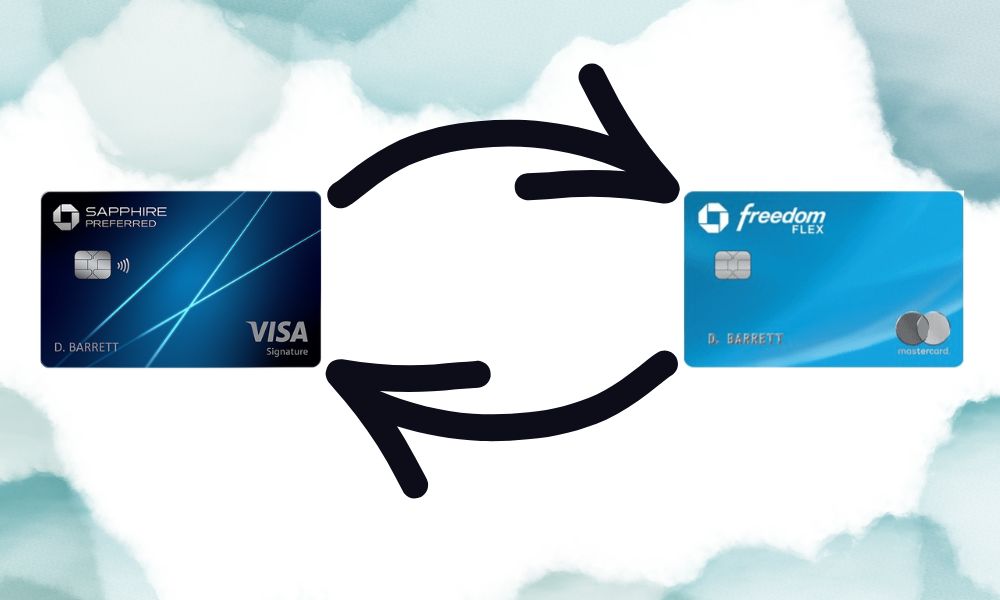
Rather than keeping or cancelling your card, look into whether it’s possible to downgrade (or otherwise product change) your card to one with a lower annual fee or no annual fee.
The ability to product change varies from bank to bank and also from card to card. For example, if you have an Amex Delta Business card, you can only product change to a different Amex Delta Business card; you can’t product change to, say, an American Express® Business Gold card, nor even to a personal Amex Delta card.
If you have an IHG One Rewards Premier credit card, you could downgrade to the IHG One Rewards Traveler credit card. That latter card has no annual fee, but you’d retain the ability to get every 4th night free on award stays. The IHG Premier card though is one of those hotel cards that comes with an annual free night certificate (which is good for up to 40K points and which can be topped up with further points), so that provides more of an incentive to keep it as it is.
On rare occasions a bank will let you product change from one type of earning currency to an entirely different type of earning currency. Citi is one such example as they’ll sometimes allow you to product change an American Airlines credit card that earns AAdvantage miles to one that earns ThankYou points (Citi’s own transferable currency).
One of the benefits of product changing is that it can help your credit score by maintaining your credit utilization percentage as that existing credit line will remain open. If you’re able to product change/downgrade to a card with no annual fee, you’re thereby able to maintain that credit limit without having to incur the expense of an annual fee.
There is a potential downside to product changing which is that, depending on the issuer, it can lock you out of earning a welcome bonus on the card you’re changing too. Check out our guide to credit card application rules by bank for more details.
American Express 5 card rule
While this isn’t going to be an issue when first starting out in points and miles, it could eventually become a factor.
American Express issues two types of cards: credit cards and Pay Over Time cards (the latter of which you might sometimes hear people referring to as ‘charge cards’.) At any one time, you can hold up to five credit cards and up to ten Pay Over Time cards. See this post for details as to which Amex cards fall under which category.
If you have five credit cards or ten Pay Over Time cards, even if you know you’ll get value from keeping a card for another year, it might still be worth cancelling it in order to make space for a different card that you’ll get even better value from, whether that’s due to its welcome offer or its ongoing benefits.
Things to consider before cancelling
After assessing your options, you might come to the conclusion that cancelling your credit card is the best option for one reason or another. Before doing that, there are several things to bear in mind and potentially act upon before actually cancelling the card.
Finish using benefits, especially calendar year ones
Some credit card benefits are offered on a cardmember (or anniversary) year basis. This means that you can use that benefit from when you opened the card up until the first year’s renewal. If you renew your card after the first year by paying the next year’s annual fee, you can use that benefit again. For example, the Chase Sapphire Reserve® card has a $300 annual travel credit which is valid on a cardmember year basis. If you’re planning on cancelling or downgrading that card, you’d want to ensure that you’d spent at least $300 on travel on it in the past year before making that change.
Other cards have benefits that run on a calendar year basis. That means that you can use that benefit in the calendar year that you first get the card, as well as the next calendar year. That means you can use the benefit twice in the first cardmember year. For example, one of the benefits on the Delta SkyMiles® Gold Business American Express card is the ability to get up to $150 back per year as a statement credit for prepaid hotels or vacation rentals booked through Delta Stays on delta.com/stays. That’s a calendar year benefit, so in your first cardmember year you can get up to $300 back on stays booked that way.

Try to assess your unused benefits some time before you’re due to product change or cancel your card though; that way you can ensure that any applicable statement credits are awarded before you make that change.
Update payment card for recurring payments
If you have your card set up for recurring payments for a product or service, you’ll need to update that payment method where applicable.
It can be worth checking your card’s past transactions from up to a year ago even if you haven’t been using it for regular monthly payments of some subscription service. For example, if I’m renewing a website hosting package for another few years, I’ll sometimes pay with whichever card I’m currently working on towards a minimum spend requirement. I likely wouldn’t want that package to auto-renew using the same card if I’d downgraded it, nor would I want there to be some kind of disruption to my service if that card was cancelled and so payment failed at the next renewal, so I’ll sometimes quickly scan the transactions I made when meeting the minimum spend requirement so that I can update potential recurring payments ahead of time.
Cancel services
On a somewhat similar note, cancel services that you only subscribed to as a result of a credit card benefit if you don’t want to pay out of pocket for that service in the future.
For example, if you have a consumer American Express Platinum card®, you might choose to subscribe to the Wall Street Journal in order to use part (or all) of your up to $25 per month Digital Entertainment Credit. That’s what I do, although it’s not something that I’d otherwise subscribe to. As a result, if you cancel your card that offers that kind of credit, you’ll want to cancel the corresponding service.

Don’t let points expire
If you have a credit card that earns airline miles or hotel points, you won’t lose those if you cancel your credit card as those get sent to your loyalty program account after your statement closes each month. However, if you have a card that earns transferable points, other kinds of points, or cashback, those will likely expire when you cancel your card if you don’t have any other cards that earn that same kind of currency. That’s important to be aware of as it’s another reason why keeping a card or product changing might be preferential to cancelling it, or getting a different no annual fee card that earns the same kind of rewards currency.
If you do decide to go ahead and cancel your card and you don’t have any other cards that’ll keep those rewards alive, be sure to cash out or transfer out your rewards before cancelling.
Activate similar benefits on other cards
Double check the other benefits that you’ve been using on a card that you’ll be cancelling or product changing and, if possible, activate them on other cards ahead of time if necessary.
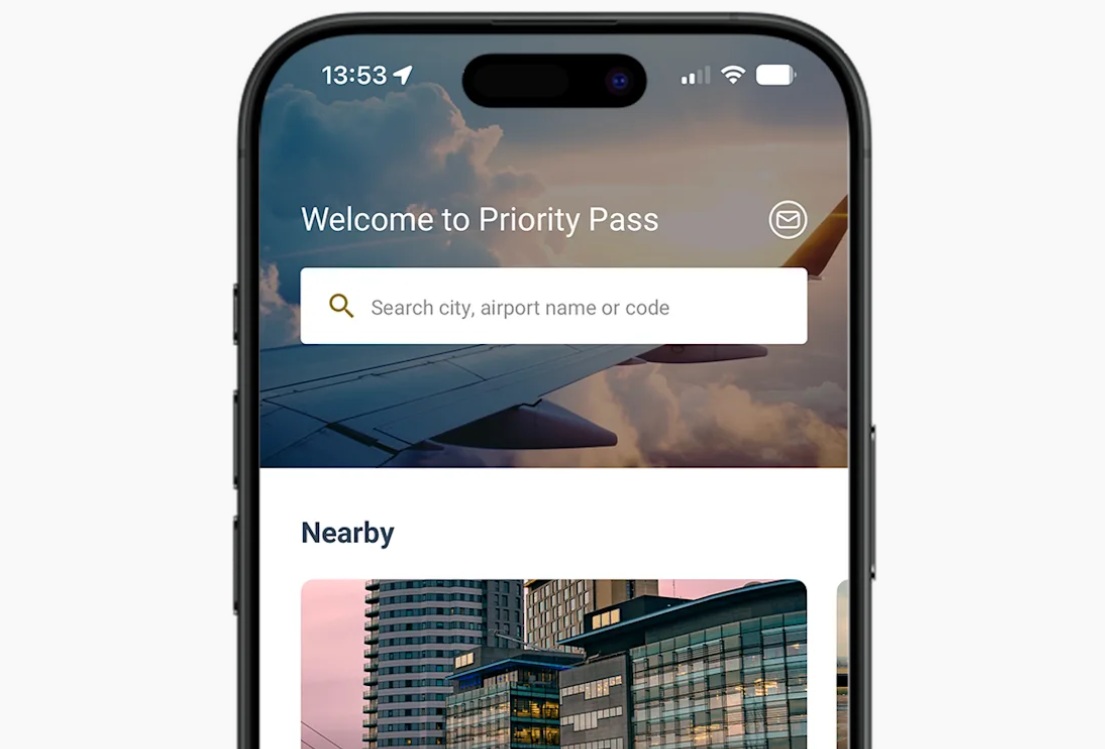
For example, you might have a complimentary Priority Pass membership as a benefit on two or more of your cards, but you’re using the Priority Pass benefit on the card you’re about to cancel. If possible, activate a Priority Pass membership on a different card before cancelling your card so that there’s no disruption with your ability to get into an airport lounge when traveling.
A similar thing goes for benefits like Global Entry, CLEAR+, Squarespace, DoorDash DashPass, Instacart+, Apple TV, elite status with hotel and rental car loyalty programs, etc.
Let authorized users know
If you have any authorized users on your card and they ever use their card, be sure to let them know that you’re cancelling the primary card and so their authorized user card will no longer work. This will save the hassle and/or embarrassment of a declined transaction in-store due to them not knowing that their card will no longer work.
 Want to learn more about miles and points? Subscribe to email updates or check out our podcast on your favorite podcast platform.



Very surprised that there is no mention of moving credit line out to another card from the same issuer before canceling (i.e. preserving the credit limit just as you mentioned as a reason for downgrading). This is the first thing I look into, for cards that I do not plan to hold. Especially since for a few issuers, it can take one call to move/reallocate credit lines, and a second call a day or two later to actually cancel after the move, so it cannot be done too close to the annual fee refund period after it hits your account.
Reading the front pages of the NYT and WSJ every day is a non-negotiable life skill and an excellent use of the NYT digital credit. Just contact customer service every 6 months or so to make sure you continue to get the best promotional rate.
“If the value of those benefits exceeds the annual fee or makes it break even, it’ll often make it worth keeping that card.”
I would say “…if value of benefits far exceeds…”. If you’re happy barely breaking even, you’ve already lost.
You’re paying now for promised benefits later, so you’re losing the time value of money right off the bat. Add to that you’re probably overestimating benefit value when it’s something you might not otherwise purchase. Add to that breakage due to human error, life changes, or just wishful thinking, and also opportunity cost of not putting that spend on a better earning card or towards a new SUB. Add to that the value of your time and headspace managing coupons for a marginal theoretical profit.
For me as far as all the premium cards out there, most are not keepers to me. CSR was an upgrade/downgrade play at best when AF was $550, now it’s a hard pass, it’s a marginal theoretical profit at best if you can take full advantage of coupons, which I can’t. Aspire is a maybe, but there are so frequent NLL links that I probably won’t. The only keeper for me is VX, it’s easy, $395 gets me $300 that’s super easy to use, 10k points, 2x everywhere, and PP. I sense a refresh coming.
I think “do the credits pay for the annual fee” analysis, as many bloggers do, is short-sighted. Adding in time value, as you do, is appropriate but is still short-sighted. What is typically not considered is the intangible value of benefits. Intangible benefits vary from card to card, as does their value. And, each person’s subjective circumstances will determine that value. I’m not going to impose my preferences on someone else.
Given the wording of “calculate how much you value the card benefits” and the comment about not valuing coupons at face value I assume he is thinking of the FM approach of adding up how much you would pay in advance for a coupon or credit. If you do this right you should account for the fact that you are purchasing a future value, the hassle of using a credit, possible breakage, etc. If you do that and your resulting (now greatly discounted) value to you is greater than the annual fee even by a little then it is probably a keeper.
Literally in that section:
Which Premium Cards are Keepers?
what about implicit costs to ever-growing number of open cards, sock drawer? are there card count targets to trim down to?
Personal vs business?
historical closed cards? sock-drawer vs graveyard
the article only considers annual fee and bank-specific (amex) max number open
Huh? I literally have over 100 cards open. I won’t close them because that reduces your credit available. I only use about 10 regularly. But If I charge a cruise or a large home repair, that could use a whole credit line. I don’t want one charge to throw off a bank approval, or hinder me from doing other things. I never close accounts.
How often do you make charges on those you don’t use regularly? I’m trying to figure out an “out of the sock drawer” system, but wasn’t sure how frequently to charge.
Depends on the bank. Chase, Discover and Amex never seem to care if I use the cards or not. Elan, Synchrony, TD, Cap1 need a charge a year.
Just adding that Citi and BOA seem to be 2yrs. Citi closed one w/o notice on me for 2yrs inactivity. BOA gave me a warning that w/o spend they would close.