

One of the things I hate most about the new couponified Chase Sapphire Reserve card is that it no longer offers 3X rewards for all travel. Combined with its best-in-class travel protections, the old Sapphire Reserve card was an easy and obvious choice when paying for any type of travel. The new Sapphire Reserve card makes things more complicated. It still offers best-in-class travel protections and even better rewards for certain types of travel, but 3X on all travel is a thing of the past. Instead, it offers 4X points on flights and hotels purchased directly and 8X on travel booked through Chase Travel. The new card is extremely rewarding for those categories, but when paying for travel directly, other than for flights or hotels, the card offers only 1 point per dollar. What’s the best alternative when paying directly for rental cars, trains, cruises, etc.? If you’re happy with the Chase Ultimate Rewards ecosystem, then the Ink Business Preferred® Credit Card is worth a look.
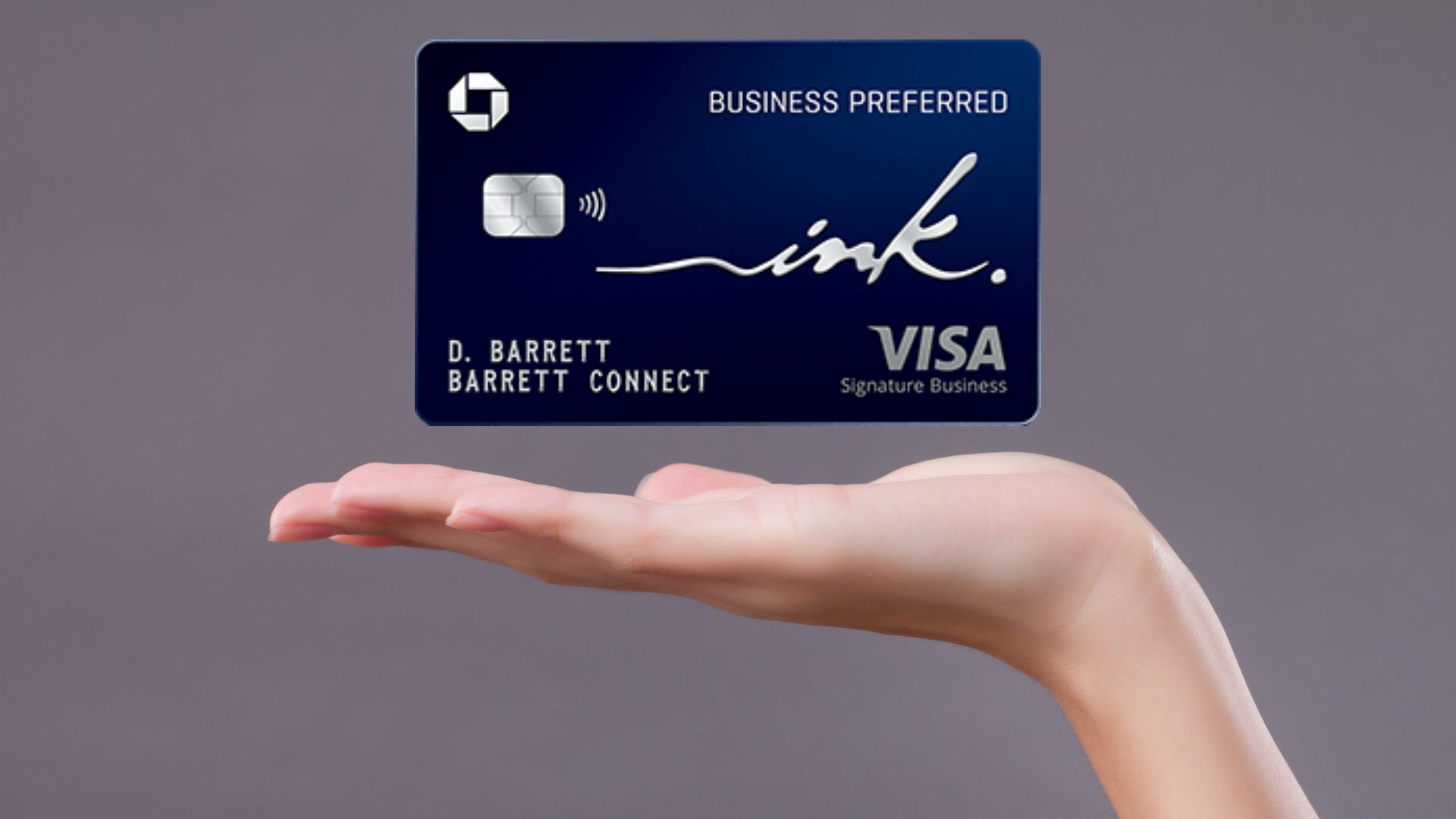
Card overview
The Ink Business Preferred card has a $95 annual fee, offers 3X Chase Ultimate Rewards points on travel and more (on the first $150,000 spent in combined 3X purchases each account anniversary year), and unlocks the ability to transfer points to Chase’s airline and hotel partners. If you have a card with no annual fee that earns Chase Ultimate Rewards points (Freedom Unlimited, Freedom Flex, Ink Business Cash, Ink Business Unlimited, etc.), you can move points from that card to the Ink Business Preferred in order to make those transfers.
More details about this card can be found here:
| Card Offer and Details |
|---|
 ⓘ $1277 1st Yr Value EstimateClick to learn about first year value estimates 100K points ⓘAffiliateThis is an affiliate offer. Frequent Miler may earn a commission if you are approved for this offer 100K after $8K spend in the first 3 months$95 Annual Fee Recent better offer: 120K after $8K spend (expired 9/4/24) FM Mini Review: Great card for welcome offer and 3X categories. Also consider the Ink Business Cash for its 5X categories, and the Ink Business Unlimited to earn 1.5X everywhere. Note that the transfer ratio from Chase Ultimate Rewards to World of Hyatt is 4:3 for cardholders who apply on or after 6/15/25 (and it becomes 4:3 on October 1, 2026 for those who applied before 6/15/26). Earning rate: 3X travel, shipping, internet, cable, phone, and advertising with social media sites (up to $150K spend per year) ✦ 5X Lyft through September 2027 Card Info: Visa Signature Business issued by Chase. This card has no foreign currency conversion fees. Noteworthy perks: Points worth up to 75% more when redeemed for travel with Points Boosts ✦ Transfer points to airline & hotel partners ✦ Cell phone protection against theft or damage See also: Chase Ultimate Rewards Complete Guide |
But it’s a business card
Can you qualify?
To apply for the Ink Business Preferred card, you must have a business. That said, it’s common for people to have businesses without realizing it. If you sell items at a yard sale or on eBay, for example, then you have a business. Similar examples include: consulting, blog authorship, planning your first novel, handyman services, owning rental property, renting on Airbnb, and driving for Uber or Lyft. In any of these cases, your business is considered a Sole Proprietorship unless you form a corporation of some sort.
How to apply
If you’re new to applying for business cards, check out these resources:
Can you use the card for personal expenses?
Anecdotally, almost everyone I know uses business cards for personal expenses. I don’t believe that there are any laws against doing so. That said, the terms in most business card applications state that you should use the card only for business use. When applying for the Ink Business Preferred card, for example, you must check a box to certify the following statement: “1) This is a business account which shall be used only for business purposes and not personal, family or household purposes.”
My advice: don’t use the card for personal expenses if you’re not comfortable doing so.
Weaker travel protections
The Ink Business Preferred card offers decent travel protections, but they’re not nearly as good as those on the Sapphire Reserve:
- No Emergency Evacuation coverage (Sapphire Reserve offers $100K)
- No Emergency Medical/Dental coverage (Sapphire Reserve offers $2,500 coverage)
- No complimentary roadside assistance (Sapphire Reserve offers $50 toward service costs for up to four events per year)
- 12-hour Trip Delay Reimbursement: The Sapphire Reserve Trip Delay reimbursement triggers after a 6-hour delay. The Ink Business Preferred requires a 12-hour delay or an overnight stay.
- Lower Trip Cancellation/Interruption coverage: The Sapphire Reserve offers up to $10,000 per person and $20,000 per trip. The Ink Business Preferred limits coverage to $5,000 per person and $10,000 per trip. Note: While the Sapphire Preferred® card’s coverage usually matches that of the Ink Business Preferred, in this case, it matches the Sapphire Reserve.
- Lower Travel Accident Insurance coverage: The Sapphire Reserve provides a maximum benefit of $1,000,000 for Common Carrier accidents. The Ink Business Preferred maximum is $500,000.
- Auto Rental Coverage
- Lower Coverage Limits: Sapphire Reserve covers damages up to $75,000. Ink Business Preferred covers up to $60,000.
- Primary vs. Secondary: The Sapphire Reserve is primary worldwide. The Ink Business Preferred is primary specifically for business/commercial purposes within the United States. For personal rentals in the U.S., it is secondary unless the cardholder has no personal insurance.
- Vehicle Restrictions: The Ink Business Preferred explicitly excludes “exotic” brands (e.g., Ferrari, Aston Martin) or any vehicle with an MSRP over $125,000. The Sapphire Reserve guide does not list these specific MSRP or brand exclusions
Note: The Ink Business Preferred card’s Guide to Benefits is available here.
My take
If you’re comfortable using a business card for personal expenses, the Ink Business Preferred card could be a good “3X travel” card for you. It’s interesting that the benefit guide acknowledges that the card might be used for personal travel since it specifically calls this out with regard to Auto Rental Coverage:
If the Rental Vehicle is not rented for commercial and/or business purposes and is instead rented for personal reasons, this benefit provides secondary coverage and would be excess and supplemental to any other insurance available. If You do not have personal automobile insurance or any other insurance, this coverage
acts as primary.
A bigger dilemma for me is with travel protections. I have both the Sapphire Reserve card and the Ink Business Preferred. When it comes to airfare and hotels, it’s clear that the Sapphire Reserve card is the better choice, as it offers 4X rewards and stronger travel protections. For miscellaneous other travel expenses, though, it’s not as clear. It really depends on whether the Sapphire Reserve card’s better travel protections matter to me.
In many cases, I believe I can get the best of both worlds. Consider an international trip where I pay for flights and hotels with my Sapphire Reserve card, and I pay for a rental car, train, and other travel expenses with my Ink Business Preferred card. As long as I pay for the flights, in whole or in part, with my Sapphire Reserve card, the entire trip should be covered for Emergency Evacuation, Emergency Medical/Dental, 6 Hour Trip Delay, and $1 Million Travel Accident Insurance. The Ink card should give me primary coverage for the rental car (since it will be outside the U.S.). The Ink card would also cover Trip Cancellation and Interruption. This is the one place where this plan could be a problem. The Ink card’s coverage limits are half that of the Sapphire Reserve card. The Ink card’s $5K per person and $10K per trip limits would be fine for most of my trips, but could be a problem if I were to book a luxury train or cruise.
Bottom line
If you’re looking for a general-purpose 3X travel card, the Ink Business Preferred card is worth considering, but it’s far from a slam dunk. First, you would need to be comfortable using a business card for personal travel. Second, when traveling for personal purposes, it offers only secondary car rental coverage in the U.S. Third, while the Ink Business Preferred card’s travel protections stack up well against most other cards, it falls far short of the coverage provided by the Sapphire Reserve Card (or The Ritz-Carlton™ Credit Card, which has the same travel protections as the Sapphire Reserve card).
If you’re looking for a good personal card to use for travel purchases, check out these posts:
 Want to learn more about miles and points? Subscribe to email updates or check out our podcast on your favorite podcast platform.


I am pretty sure that a travel expense has to be completely paid on the CSR to be eligible for the insurances with the exception of award tickets.
Not true. Most of the CSR travel protections have terms like this: “The Covered Traveler is eligible when You charge all or a portion of a Covered Trip to Your Covered Card and/or use redeemable Rewards”
From the Chase Sapphire Reserve website:
Trip Cancellation and Interruption Insurance
-$10,000 per Covered Traveler
-$20,000 per Trip for all Covered Travelers and $40,000 per twelve (12) month period per Account
-the actual amount charged to the Covered Card and/or redeemable Rewards used for a covered travel expense. Note: Eligible purchases made with redeemable Rewards will be reimbursed in dollars.
This change was made 18 months ago. Greg, you actually posted about this: https://frequentmiler.com/chase-tanks-pay-partial-trip-cancellation-and-interruption-insurance/
I take long trips. Not everything that reserve and pay for, is on my CSR. Matter of fact, a lot isn’t, especially airline tickets. Why would anyone expect trip components not paid for, on the CSR, be covered by Chase’s cancelation insurance?
I don’t expect cancellation insurance to be covered but the other protections I mentioned in the post should be.
I would get trip cancellation from the Ink card. I called this out in that paragraph: “The Ink card would also cover Trip Cancellation and Interruption”
Where does Chase state that “The Ink card should give me primary coverage for the rental car (since it will be outside the U.S.)”? The specific terms quoted don’t say that specifically unless one can interpret “If You do not have personal automobile insurance or any other insurance, this coverage acts as primary” as saying, in effect, “Since you are outside the U.S., by definition, you don’t have (applicable) personal automobile insurance.” Am I understanding correctly? Has this been tested and found to be true?
The benefits guide (https://www.chasebenefits.com/inkbusiness2) is clear: Outside the United States, where this benefit is available, the coverage provided is primary
Does this card offer 3x on tour operators too? Or just with travel booked directly? Ski trips booked with a tour operator with my ski club are large expenses for me and I’d love to get more than 2x. I have the Ink Business Plus (no longer available) that I use for 5x on telephone (and my DirecTV shows up on my AT&T bill) and occasional office supply store purchases. I’d hate to cut that to 3x but if I did a product change maybe it’s worth it?
No, most tour operators wouldn’t count unless you book through a travel agency. From this page (https://www.chase.com/personal/credit-cards/rewards-category-faq), we can see what counts:
And what doesn’t count:
Fortunately it looks like our tour operator is classified as a travel agency. I found an old charge from when I had the CSR and it earned 3x as travel. Thanks for the update.
>the entire trip should be covered for Emergency Evacuation, Emergency Medical/Dental… and $1 Million Travel Accident Insurance
Ok but so what? Take the odds of qualifying for them and the payout (minus your time to document and submit them). What’s it worth? $5? Keeping in mind most people will never in their lives use those benefits.
>6 Hour Trip Delay
Realistically my “expenses” in these situations are slumming back to the lounge ($0) or maybe an overpriced airport meal. I know we can get tricksy and maybe try to Amazon prime now deliver an electric toothbrush or pick up some USB chargers or nice wireless headphones or an Hermes tie which we “need” but that requires a bit of legwork, a risk of not being reimbursed, and often only minimal real savings (because electronics are so ridiculously overpriced at the airport you’ll hit the limit very easily with only a little to show)
Even more than that, the 6 hour delay needs to be for one of the covered reasons: weather, aircraft mechanical failure, organized strike, or the aircraft being unavailable because it was involved in a skyjacking incident. (yes, seriously)
You know what’s not covered? Common reasons for delay like crew shortage/timeout, ATC ground stops, and airline IT system failures. Things like the Crowdstrike incident weren’t covered.
It also doesn’t cover forward travel expenses, so if your thought was “hey, my flight is delayed but I can just rent a car and drive the last leg and get the insurance to pay for it” you’re setting yourself up for a bad time.
People latch on to that 6 hours from the marketing blurb but don’t read the actual terms in the guide to benefits so they don’t find out until something goes wrong that the list of perils named in the policy is incredibly short. Travel “protections” might be the most criminally overhyped aspect of cards, because it tricks people into a false confidence that things will be covered when they need it.
Try convincing these bloggers of how hard these insurances are to use. Three tries for Chase insurances, not one paid.
The loss of 3x with CSR on all travel hits hard with rental cars (which was nice for primary insurance coverage), cruises, and tour operators. However, it’s now 4x for hotels that are not already co-branded cards (think, better to get 4x at a Four Seasons, etc., unless you use FHR and get 5x via Amex Platinum, etc.) Yes, if you have a “business” Ink 3x may be better, if you prefer UR. Otherwise, I guess, Palladium 2x + 1x Accelerator might get you 3x. BofA Customized Cash Rewards 3x up to $2,500 + the 75% bonus, until they nuke Platinum Honors (but it’s only cash back). I guess 2x via CSP or C1 cards is ‘fine,’ but not like it used to be with the old CSR. Eh, the game is getting harder, friends.
The “refreshed” CSR initiated a process for me to revamp my primary card holdings. I downgraded CSR –> CSP, upgraded my no AF Bonvoy card –> Ritz, and will pick up the CIP in a few months. I’ll continue to use my AMEX Plat for airlines. I’ve never put much faith in travel protections from credit cards aside from rental car insurance. I only tried to use the trip delay coverage on my CSR once and was denied due to a technicality. They intentionally make the process way too tedious. I was only out about $350 and it wasn’t worth my time to play their game so they won. I’ll get a stand-alone travel insurance policy for anything that is a big trip.
I have thought that the Sapphire Preferred travel protections were the next-best thing to CSR, but you don’t mention it at all. That’s what I use for airline ticket purchases, in particular. Plus that removes the business-purpose issue.
I didn’t discuss the Sapphire Preferred because this post was about a 3x alternative, but yes, Sapphire Preferred is a good option at 2X. I may write a separate post about that. The Sapphire Preferred’s travel protections are nearly identical to the Ink Business Preferred, but (as I noted in the post), the Sapphire Preferred has better Trip Cancellation/Interruption coverage and, of course, better primary car rental coverage since it doesn’t have to be for business purposes.
I got this card a couple of years ago thinking I was going to cancel the Reserve. So far, I’m using all the coupons so I now have both. Is it worth $95 for 3x?
That’s a tough question to answer without knowing how much you spend at 3x and what your best alternative is
Note that Chase has sent out surveys to some current cardholders. The survey suggests that the annual fee is going up.
Yeah I’m shocked (but happy) that they haven’t refreshed this yet
Now I will pay for cruises with this card.
Call me cynical but I just can’t see the 3x on all travel lasting though the next year or two
The car rental insurance of the Chase Cards is always touted but it is extremely painful to go through a claim
Assurant the company that runs the program is difficult to use and designs the process to wear out the claimant
I’m headed back to Amex for car rental insurance
I found the opposite. They ask for a lot of documents. You provide what you have (no police report for a scraped tire rim), you wait, wait some more, and then you get paid. Having photos is useful.
They also don’t cover loss of use or depreciation while Amex does cover these common charges
FYI
Surprised they did that change considering the sapphire preferred is 2X. So I just use that now.
This is what I did. I have a FU and CSP and added the Ink BP. Works well for me and much cheaper total AF. The CSR refresh was not in the right direction for me, and I really wanted a general bonus multiplier for a broad travel category. I haven’t looked back.
If I’m using the Bilt Palladium card and using Bilt cash for mortgages, then I’m essentially earning 3.33x back on all purchases. Is there any benefit in using the Ink Preferred over this for travel purchases? Apart from staying within the Chase ecosystem
I had this same thought and ended up downgrading my Ink Preferred to the Ink Cash.